

The Action Group | London
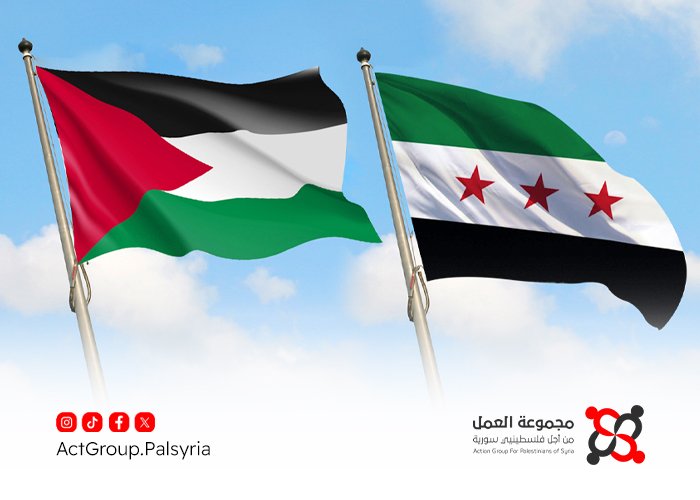
The Al-Zaytouna Center for Studies and Consultations issued a new strategic assessment entitled “The Future of the Palestinian Issue in Syria,” prepared by political researcher Dr. Tariq Hamoud, highlighting the challenges and opportunities facing Palestinian refugees in Syria following the fall of the Bashar al-Assad regime on December 8, 2024.
The report emphasizes that this historic transformation represents a turning point in the course of the Palestinian cause inside Syria, as Palestinians face a new reality characterized by security and administrative fragility, in light of the absence of clear policies from the new authority regarding their legal and political status.
The report identified three main challenges: rebuilding destroyed camps, most notably Yarmouk Camp; uncovering the fate of thousands of detainees and forcibly disappeared persons in the prisons of the former regime; and the return of internally and externally displaced persons. It emphasized the need to provide a legal and humanitarian environment that guarantees dignity and safety for refugees.
On the political front, the report addressed the repercussions of the US conditions imposed on Syria in exchange for easing sanctions, particularly the condition of ending the military and political presence of Palestinian factions. It anticipated three possible scenarios for Damascus’s handling of this issue, ranging from full compliance with the condition, to simply prohibiting military action, or ignoring it and maintaining the status quo.
The report concluded with recommendations, most notably: affirming the right of return, reactivating Palestinian-Syrian institutional coordination, and formulating a transitional legal framework that guarantees the civil and political rights of Palestinians, while preserving their presence and status in the new Syrian state.
This report comes at a pivotal time when Palestinians in Syria are reconsidering their position on the political and social map, after more than seven decades of displacement and relative stability, and raises urgent questions about their future in their homeland of refuge.