

United States – Action Group
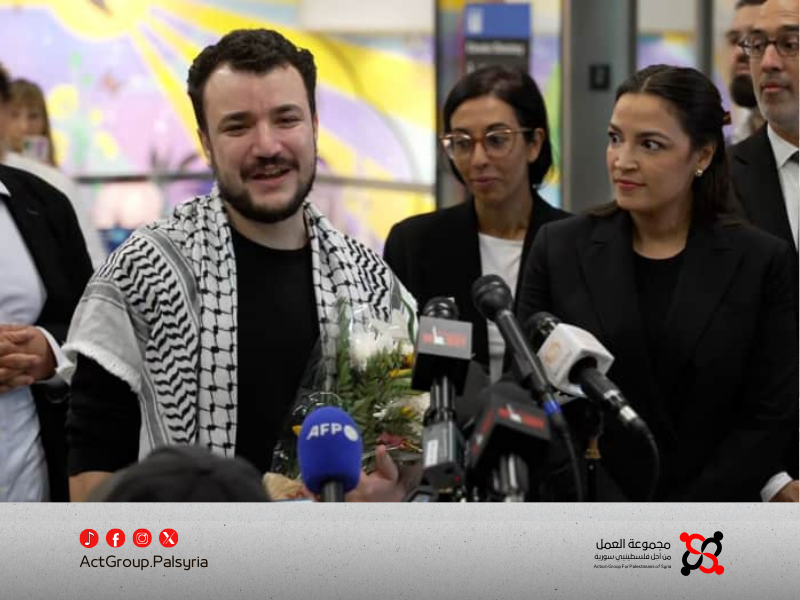
On September 12, 2025, a US immigration judge ordered Palestinian activist Mahmoud Khalil deported to Syria or Algeria, after concluding that he had “failed to disclose material information”in his application for permanent residency (green card).
Khalil’s lawyers announced their intention to appeal the decision, citing a federal injunction in New Jersey preventing the government from immediately deporting or detaining him while the human rights case against him is reviewed.
However, the lawyers expressed concern that the appeal process could be rushed and may not be fair to his clients.
During the Columbia University student protests against the 2023 Gaza war, Khalil emerged as a negotiator between students and the university iadministration, and was part of a movement demanding that the university divest from Israel-related investments and other pro-Palestinian actions.
*Who is the activist Mahmoud Khalil?*
Khalil was born in Syria to a Palestinian refugee family. He spent his childhood in the Khan al-Shih Palestinian refugee camp and was displaced to Lebanon during the war in Syria.
He taught English and earned a bachelor’s degree in computer iscience from the Lebanese American University.
He previously worked with a Syrian-American NGO working in refugee education, with the British Chevening Scholarship Program in Beirut, and was a member of international agencies such as UNRWA.
In 2022, he moved to the United States on a student visa and enrolled at Columbia University, where he earned a master’s degree in international and public affairs.
He is married to an American citizen and has a child. His lawyers have claimed that he missed the child’s birth due to his arrest.
*The legal dimension and potential risks:*
Human rights organizations raise concerns that this decision may constitute a violation of freedom of expression, particularly since the allegations against Khalil relate to his political and academic activism and his advocacy for Palestinian rights, which is often protected under the concepts of freedom of expression and assembly.
Deporting a person to Syria or even Algeria carries particular risks for Palestinian refugees, including the risk of persecution, or of security or humanitarian emergencies in Syria, as well as the lack of effective human rights protections if they are placed under conditions of forced deportation or without adequate judicial oversight.
US law stipulates that permanent residents can be deported if it is proven that “material information” was concealed in their claims. However, due process, the possibility of appeal, the right to access to counsel, and other rights related to human dignity and justice must also be guaranteed.
Observers believe that this issue is not simply an immigration matter, but rather touches on constitutional and legal rights such as the right to freedom of speech, assembly, and peaceful protest, particularly in the context of university student activism. This makes it a significant case of how authorities balance state security with individual rights.