

Fayez Abu Eid – Action Group
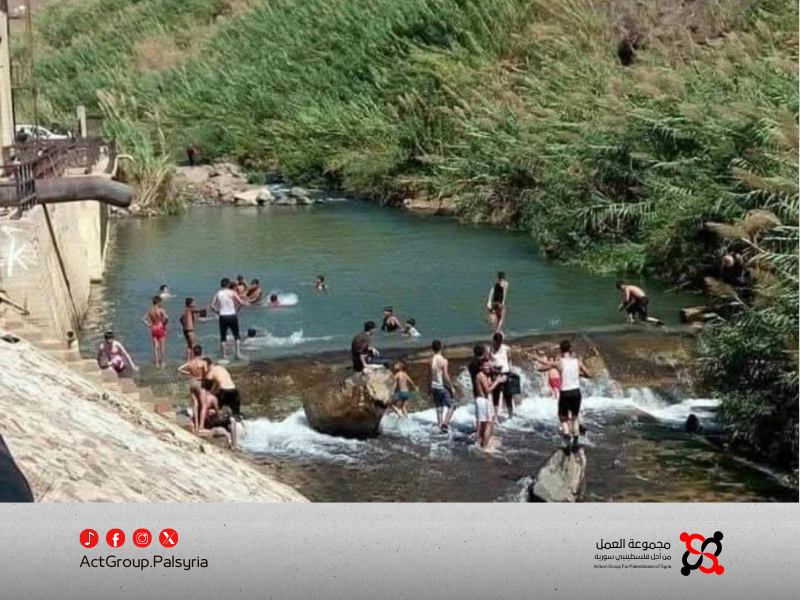
The village of Al-Ajami sits on the shoulder of the Al-Hareer Valley in the western Daraa countryside, a captivating natural masterpiece adorned with its small lake, the flowing springs of Ain al-Abd, and olive and pomegranate trees.
The testimony of artist Mazen Al-Natour, head of the Artists Syndicate, who owns a farm in the Al-Ajami area west of Daraa, is sufficient. He said in an interview:
“I am a son of the countryside and a resident of the city of Tafas. I am accustomed to the countryside’s atmosphere and nature, so I always spend my vacation here whenever I have the opportunity. The place is relaxing and the air is refreshing.
”But behind this captivating natural beauty lies the daily suffering of the villagers, especially the Palestinians, who, along with their Syrian brothers, have woven a cohesive social fabric based on love and brotherhood. However, they still bear the concerns of education, services, and access to the most basic necessities of life.
Palestinians in Ajami
More than 25 Palestinian families live in Ajami village, forming an integral part of its social fabric.
Among these families are: the “Sawalmeh” (including the Shahada al-Dhiban family, who fled to the village in 1948 from the village of al-Khisas), the “Aqrabawi”, the “Shtewi”, the “Bitar”, and the “Saeed”. Despite the small size of the village and its rural nature, these families live a daily struggle. Most of their members work in agriculture and livestock, benefiting from the fertile soil and the abundant water in the past.
*Education Is a Hard Journey*
One of the most prominent struggles facing the people of Ajami, both Syrians and Palestinians, is the issue of education. The village has only one primary school.
This shortage forces middle and high school students, including dozens of Palestinian students, to endure a daily, arduous, and expensive journey to reach their schools in the neighboring town of Muzayrib, about 7 kilometers away.
This ordeal requires students to wait long hours on the side of the main road, at unsafe intersections, waiting for one of the random means of transportation, or “wasta,” to transport them to and fro.
Families, in light of the difficult economic conditions, bear additional financial burdens to secure these transportation costs, which can reach approximately 120,000 Syrian pounds per week for a single family, a prohibitive sum at this time.
This painful reality is prompting many residents to urgently demand that UNRWA and charitable organizations provide regular and safe transportation for the village’s students, especially the Palestinians, to ease this daily burden and ensure their safe and hassle-free access to school.
It also calls on initiatives such as Abshari Hawran to take into consideration Ajami students and their urgent need for transportation to ensure their continued attendance at their education.
*Shining Models*
Despite the difficulties, the Palestinian people of Ajami stand out as shining examples of struggling youth who refuse to surrender to reality. One such example is Ziad Al-Saeed, a geology graduate who preferred to create his own opportunities rather than wait for a job.
Ziad decided to invest in the village’s land, transforming a plot of land in Ajami into a small green paradise, where he grows various vegetables and raises cows and poultry.
His small project has become a generous source of income and an example of determination and hard work.
“This land taught me that giving never stops, and that struggle is the only way to build our future,” Ziad says. Ziad hopes to find a partner who will help him in his project and walk with him on the same path, embodying his love for the land and attachment to it.
We learned that Ziad is looking for a woman who doesn’t carry chalk but carries the concerns of the land, a life partner who will dig her feet in the mud and stand beside him under the scorching sun.
He wants a companion who will share with him the fatigue of the plow and the joy of the harvest, and this difficult criterion is the secret behind his reluctance to marry until now.
*The service reality:*
The suffering is not limited to education alone. The village faces significant service challenges, most notably the ongoing sewage crisis, exacerbated by a blockage in the main sewage line.
This causes sewage to flood into residents’ homes in low-lying neighborhoods, threatening their health, property, and environment.
Additionally, the village is experiencing a drinking water crisis after the “Ain Al-Abd” springs, the village’s primar1y source of fresh water, dried up, forcing residents to purchase water from tankers at high prices.