

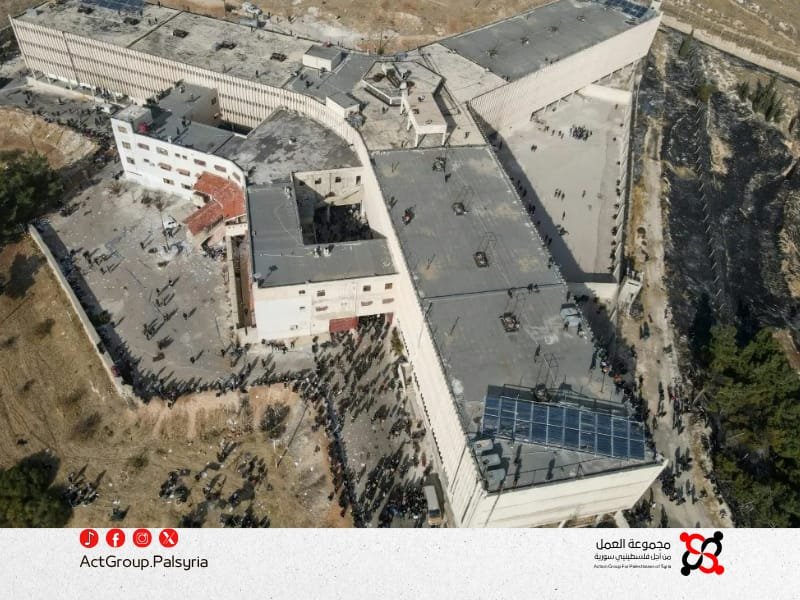
Damascus | Action GroupÂ
A survivor of Sednaya Red Prison””one of the most notorious prisons of the defunct Syrian regime””has made a humanitarian appeal to locate the family of Nidal Bahjat al-Awad, a young Palestinian-Syrian man who was martyred inside Sednaya prison years ago.Â
According to Hamza Nader, Nidal al-Awad was a resident of the al-Hajar al-Aswad area south of Damascus. He married in the spring of 2014, before attempting to leave the area just two months later due to the deteriorating health of his pregnant wife.
While attempting to reach Damascus, he was arrested by Branch 227 (the Area Branch), then later transferred to Branch 235 (the Palestine Branch), and from there to a secret facility known as the “48 Warehouses”near the Kafr Sousa area, before being transferred to Sednaya Red Prison, where he was martyred.
According to information received by the activist who survived the prison, his family was besieged in southern Damascus at the time and was unable to leave during his detention. Their fate remains unknown to this day.Â
Hamza Nader, who launched the appeal, said: “I know that he was martyred with me in Sednaya al-Ahmar, and I hope to check on his family, perhaps they are still alive.”
Nader called on anyone who has any information about the family of martyr Nidal Bahjat al-Awad to contact him or the human rights organizations concerned with the affairs of Palestinian detainees in Syria, to help reach his relatives and provide them with humanitarian support.
It is worth noting that the Action Group has documented the fate of thousands of Palestinian refugees who were subjected to arrest in Syria, enforced disappearance, and death in Syrian prisons, as well as those released between March 2011 and December 2024. The group published its latest report, “The Painful Harvest,” in which it documented 7,237 Palestinian refugees who were arrested until December 2024. The forcibly disappeared detainees: 5,370 (approximately 72% of the number monitored), and those who died under torture: 1,305 (approximately 19.5% of the number monitored).