

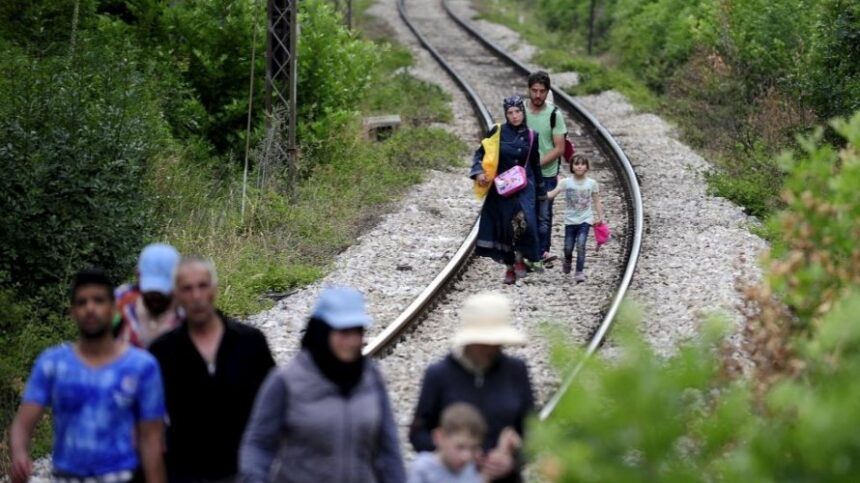
The AGPS monitored some of the biggest difficulties facing the new Palestinian Syrian refugees in Europe, namely:
- Forcing them to fingerprint in one of the European traffic countries such as Italy, Hungary, and Bulgaria, where many Palestinian Syrian refugees were forced to fingerprint in those countries, which prevented them seeking asylum in other European countries, with the exception of some German states which may condone Footprint, where the Dublin Convention apply to refugees who leave their fingerprint in those countries and which provides for returning refugee to the first country he fingerprint at.
- Long waiting periods spent by many refugees pending their residences, where it takes periods of up to more than a year.
- Reunion delay, where in some countries it takes a period of up to more than a year and a half, making residents and refugees in poor psychological conditions, especially in the case of a family being in dangerous areas, in addition to the economic burden.
- Difficult access of families in Syria to European embassies in Lebanon or Turkey, because Turkey to prevent their entry and in Lebanon as well.
- Absence of a representative and clear body for them to follow up their problems and actions, and to acknowledge them with the nature societies in which they live.
- Language problem and the difficulty of getting a house due to the influx of refugees in large numbers on some European countries.
- High cost of transportation and poor communication among Palestinian Syrian refugees due to distances.
- It is worth mentioning that the AGPS indicate in their reports that the number of Palestinian Syrian refugees who arrived in Europe during the past four years has exceeded 36 thousand Palestinian Syrian refugees.