

Palestinian Syrian refugees in Germany, who fled the raging war in Syria, complain from great difficulties. The AGPS connected with some of them and monitored most prominent of these obstacles:
Most of the Palestinian and the Syrian refugees were distributed to camps far from the city centers, and some of them were put in tents or in large groups in gyms badly as they shared bathrooms and sleep is common, creating big problems for the refugees, while they were given dates for far periods to meet them and decide on their asylum file.
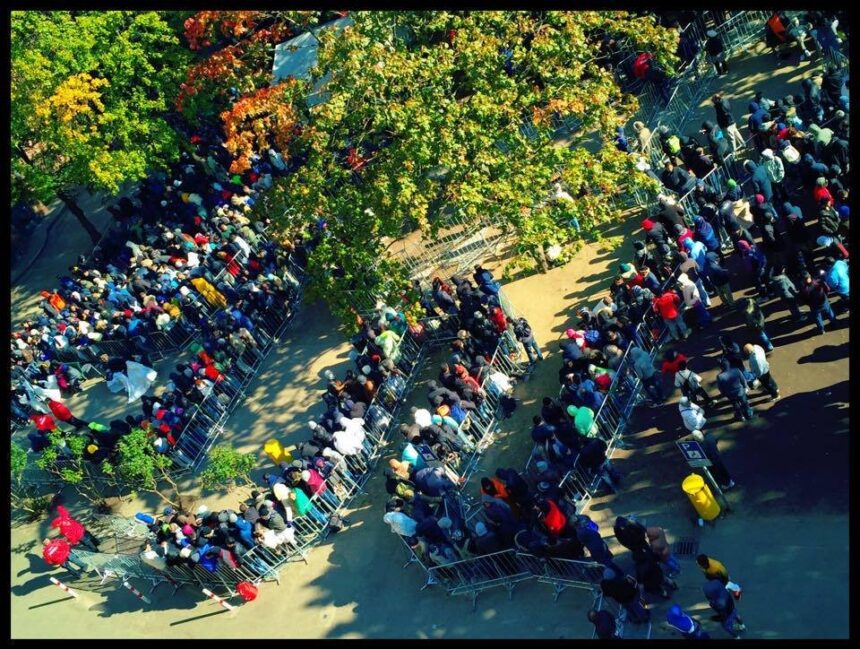
Many of them wait outside the offices of health and social affairs, especially in the capital Berlin for registration, while the refugees are suffering from the bitter cold that began obtained the queues of immigrants who are awaiting long hours for registration. The refugees in Germany are also complaining of major difficulties in getting house for rent and exploitation of brokers, in addition to the delay in some provinces to grant passport and identity of accommodation; duration of 8 months.
The most prominent problem, which is one of the most important difficulties faced by refugees in Germany, is the language problem, and the failure to provide interpreters in order to facilitate refugees’ affairs in post obtaining residency, and to require the elderly refugees to enter into German courses even if illiterate.
 Palestinian children and youth are also suffering from being merged into the German community, where they are forced to attend mixed swimming lessons and which they considers a form of offending their traditions and morals.
The refugees are complaining from the high cost of transportation, and poor communication among them because of the long distances, as well as the absence of a clear representative for them to follow-up their problems and actions and to help them get familiar with the nature of societies in which they live.
Families in Syria are facing difficulties of reaching European embassies in Lebanon or Turkey, because Turkey prevents their entry and stresses in Lebanon as well.
The families are given dates and for a long time for an interview at the German Embassy may exceed 6 months, but in spite of these new difficulties for the Palestinian Syrian refugees in Germany, they preferred to what they have seen and live through the reality of bitter and painful in Syria, such as bombing, displacement, arrest, and death.
It is noteworthy that there is no official statistics on the number of Palestinian Syrian refugees in Germany, which classified them as stateless in accordance with German law, but Germany was committed to the Geneva Convention, to facilitate the naturalization of stateless persons based on the German citizenship law in 2000.