

Action Group – Rural Damascus
A recent health incident involving a Palestinian refugee in Damascus has raised serious questions about the procedures for dispensing medication and medical oversight at a UNRWA-run health center.
According to information received by the Action Group, the Palestinian refugee “K.M.”””aged over 60””was transferred to Damascus Hospital on Saturday evening after suffering from a high fever and extreme facial pallor. Medical tests revealed a severe drop in hemoglobin levels to 6 g/dL, prompting further laboratory analysis.
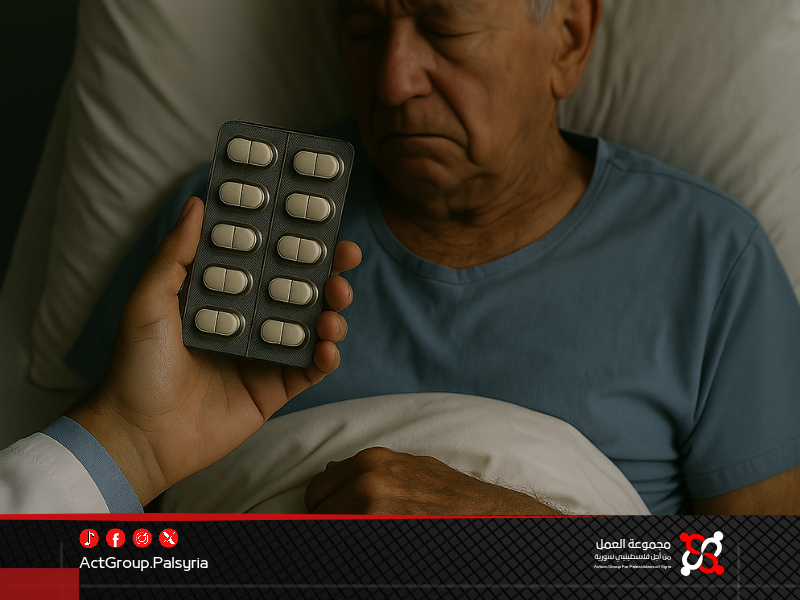
Medical sources confirmed that most of the tests were conducted at the patient’s own expense due to the limited services available in the hospital. Upon reviewing the test results and the medication the patient had been taking, the attending physician expressed surprise at one of the drugs prescribed. The medication is typically used to treat neurological disorders and epilepsy, and it requires regular monitoring and precise evaluation of the patient’s condition.
The patient’s wife stated that the drug was dispensed at a UNRWA health center as a treatment for nerve issues without proper follow-up or supervision””something the doctor deemed an unsafe practice that could lead to complications. There are indications the drug may have contributed to hemolysis (breakdown of red blood cells) in the patient.
The patient also noted that while on the medication, he experienced intense fits of anger and unusually aggressive reactions, further raising doubts about the suitability of the prescribed treatment.
This incident has sparked serious concerns about the medical protocols followed in some UNRWA clinics and their adherence to professional standards in prescribing medications and monitoring patient cases, especially among elderly individuals and those with chronic illnesses.
Local civil society groups and health observers within the Palestinian camps are calling on UNRWA’s health administration to launch an investigation into the incident and to review the current drug prescription protocols to ensure patient safety and prevent further complications caused by misdiagnosis or inappropriate prescriptions.