

Action Group – Syria
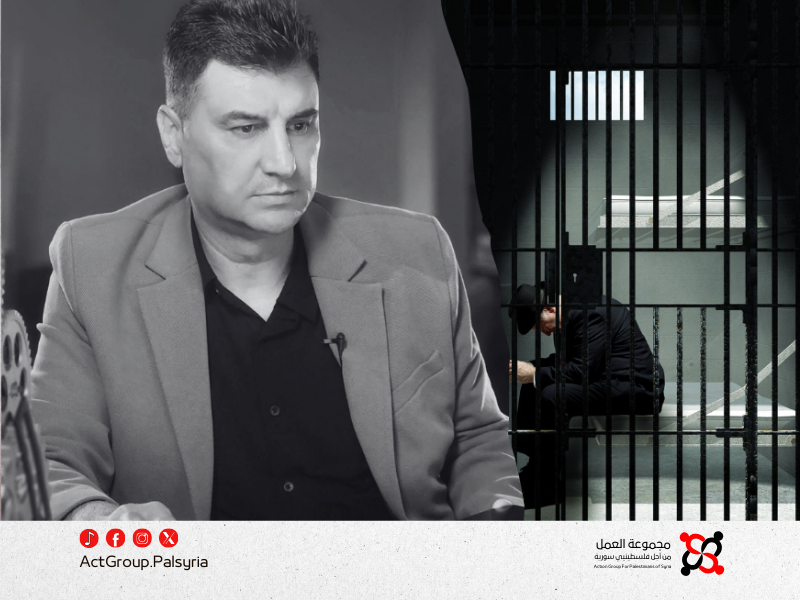
Fayez Abu Eid, director of the Action Group for Palestinians of Syria, confirmed that the period following the fall of the former Syrian regime in December 2024 placed Palestinian refugees at a new historical turning point, marked by complex challenges related to identity, rights, and livelihoods.
In an exclusive interview with Ultra Syria, Abu Eid explained that Palestinians shared the suffering of Syrians during the years of war, being victims of torture, arrest, and displacement. Their camps, such as Yarmouk, Handarat, and Daraa, paid a heavy price in terms of destruction and displacement.
He added, “Today, Palestinians in Syria face crucial questions related to justice, representation, and reconstruction,” noting that civil society organizations continue to work inside the camps.
*Lost Rights and Legal Challenges*
According to Abu Eid, Palestinian refugees continue to suffer from a decline in some rights, particularly in the field of real estate, as they are treated as foreigners in property ownership. He said, “This legal change will have a significant impact on their economic and living conditions, which requires urgent action to repeal the amendments that abolished their equality with Syrians.”
*Transitional Justice and Detainees*
Regarding the issue of Palestinian detainees, the director of the Action group revealed that he raised this issue during his meeting with the head of the General Authority for Missing and Detainees, Mohammad Reda Jalkhi, in the middle of this month. The meeting emphasized the inclusion of the issues of Palestinian detainees and missing persons within the transitional justice process. He emphasized that “including the issues of the forcibly disappeared on the agenda of the Transitional Justice Commission is an essential step towards uncovering the facts and determining responsibilities.”
*Camps between Reconstruction and Identity*
Abu Eid pointed out that the Palestinian camps continue to suffer from a lack of basic services, especially Yarmouk and Handarat, despite some improvement in food prices and fuel availability. He added, “The residents’ desire to return to their camps and rebuild them reflects a commitment to Palestinian identity and a rejection of turning the camps into mere residential neighborhoods.”
*Priorities for the Next Phase*
The director of the Action group concluded his remarks by emphasizing that the priorities of the Palestinians of Syria are divided between transitional justice to uncover the fate of detainees and missing persons, rebuilding the camps, and the search for a unifying national authority, in addition to improving living and educational services. He said, “The harsh experience that the Palestinians of Syria have gone through represents an important national lesson about diaspora, identity, and representation, and calls for a reformulation of the Palestinian discourse to reflect the reality of the refugees’ suffering and aspirations.”