

Action Group | Jordan
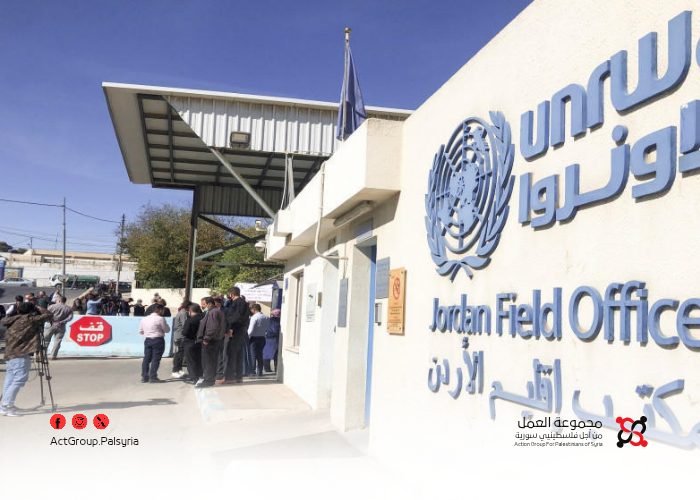
Palestinian refugees displaced from Syria to Jordan have sent a strongly worded letter to the United Nations Relief and Works Agency for Palestine Refugees (UNRWA), protesting what they described as a lack of transparency and repeated, unjustified delays in the disbursement of periodic aid. They warned of possible escalation, which may include gathering in front of the agency’s offices and demanding alternative shelters due to their inability to cover rent and basic utility bills.
In the letter, a copy of which was obtained by the Action Group, the refugees stated that they are living under extremely difficult legal, economic, and social conditions, and that the assistance provided by UNRWA constitutes the only source of income for most families. As such, any delay in disbursement directly impacts their livelihood and mental stability.
The refugees explained that the delay in disbursing the allocations””usually granted every three months””has led to accumulating debts and an inability to pay rent, secure food, healthcare, and education for their children. They added that the continuation of this situation threatens to increase levels of poverty and marginalization within the refugee community.
The refugees called on UNRWA’s administration to take urgent steps, including:
1. Immediate disbursement of the overdue financial aid.
2. Setting a clear and fixed timetable for future aid disbursements.
3. Opening transparent communication channels with refugees to explain any delays or changes in the aid mechanism.
4. Considering the provision of additional aid as compensation for the harm caused by the delays.
The refugees concluded their letter by expressing appreciation for the role UNRWA plays, while calling for an immediate response that preserves their dignity and safeguards their basic rights.
The number of Palestinian refugees displaced from Syria to Jordan is estimated at around 6,700 individuals. They live in harsh conditions and face numerous obstacles in accessing basic rights such as education, healthcare, and employment, and are at risk of deportation by Jordanian authorities.