

Damascus – Action Group
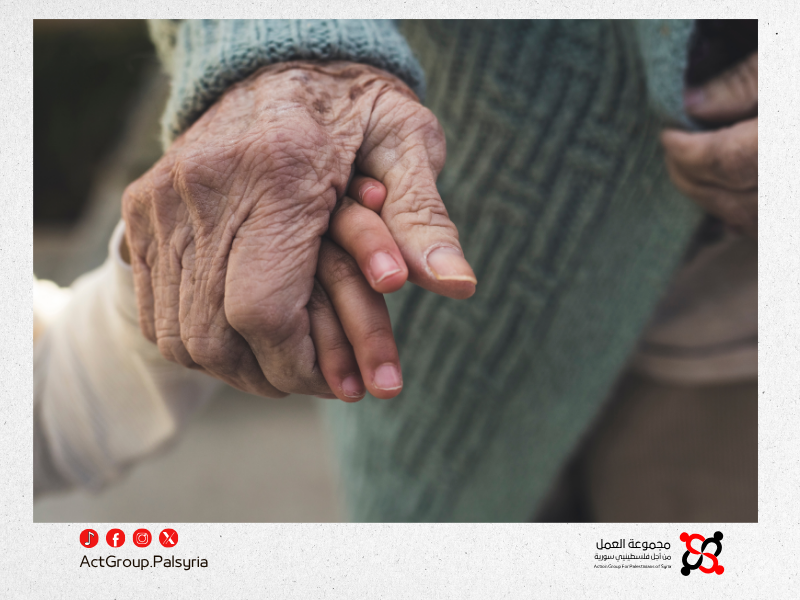
The report, “The Painful Harvest,” reveals a harrowing chapter in the suffering of the most vulnerable Palestinian refugees in Syria, who found themselves marginalized during the years of war. Among them were the elderly and people with disabilities, who paid a heavy price as a result of the siege, displacement, and the collapse of healthcare services.
The report documents the successive traumas inflicted upon elderly Palestinians, many of whom lost their lives due to their inability to escape the bombing or the shortage of their chronic medications. Their already precarious conditions were exacerbated during the sieges, which were marked by severe shortages of food and water.
The report also indicates that a number of elderly people were left behind in their homes during the rapid waves of displacement, lacking any suitable means of transport or protection. Others faced significant difficulties in reaching medical centers, leading to the worsening of their illnesses or their deaths.
People with disabilities a death far from spotlight
The report highlights a significant gap in the protection afforded to people with disabilities, who were the least able to move during military operations, making them among the most vulnerable victims, often killed in their homes or during fires and bombings.
Many of them also faced harsh conditions during displacement due to the lack of specialized equipment and suitable transportation, in addition to widespread deprivation of rehabilitation and healthcare. The report also indicates that they were subjected to discrimination in the distribution of aid and that their needs were not included in humanitarian response plans.
*Muffled voices and and suffering unseen by anyone*
The report reflects a shocking humanitarian reality.
Many families with elderly or disabled members were completely unable to protect their most vulnerable members, especially during sieges or fires in their homes.
Testimonies collected by the documentation team show that these groups paid a double price due to the slow pace of evacuations, delays in aid delivery, and the lack of basic necessities such as wheelchairs and vital medications.
*Significant challenges in documentation:*
The report indicates that cases of the elderly and people with disabilities were the least represented in the records compared to the rest of the victims. This gap is due to several factors, including the reluctance of some families to mention the presence of elderly or disabled people among the victims, the field difficulties and the logistics of the siege, in addition to social considerations that led some to not disclose these cases at the time.
The Action Group emphasizes the need for elderly and disabled survivors to have specialized healthcare and psychological support programs, as well as effective protection mechanisms during crises. It also stresses the necessity of compensating victims’ families and incorporating the needs of these groups into future relief plans to ensure such tragedies are not repeated.
*Years of documentation reveal this gap.*
The Action Group connects the findings of this report to its extensive record of documenting violations against the elderly and disabled over the past years. The data clearly demonstrates a cumulative effect of their suffering, whether during the siege, displacement, or in temporary shelters.
The report affirms that the stories of the victims revealed in “The Painful Harvest” are not isolated incidents, but rather part of a recurring pattern of neglect and the absence of protection policies specifically targeting these groups