

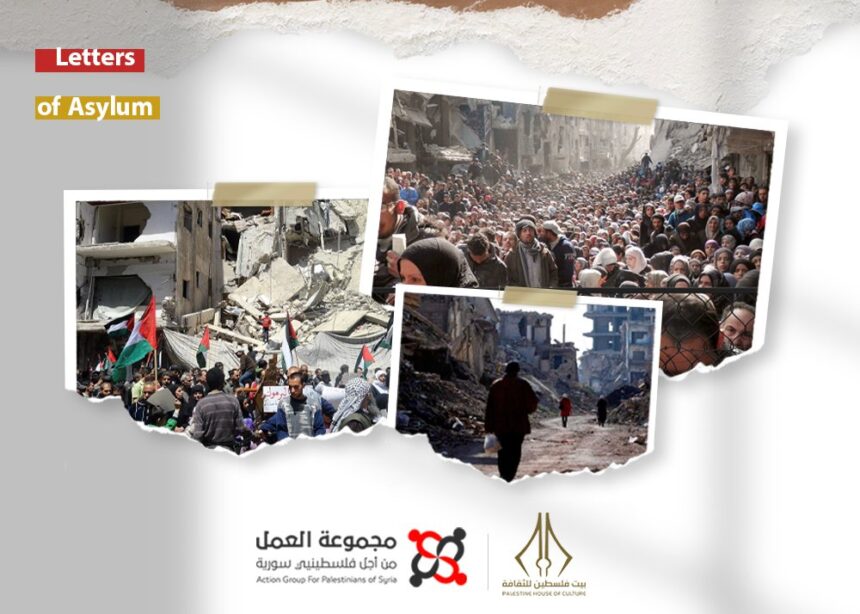
Istanbul – Special:
Based on the importance of literary documentation of oral memory, and in an effort to present Palestine by all possible means, the Working Group for Palestinians in Syria and the House of Palestine for Culture announced the start of publishing narrative texts about the displacement and new diaspora that affected thousands of Palestinians in Syria from 2011 until now. These texts narrate the severe suffering documented by their authors in oral and written memory. Several short story writers have drawn inspiration from these texts, creating new narrative forms in terms of characters, time, place, difficulties, and events that accompanied them in these harsh experiences, which are a painful continuation of what the ancestors endured during the Nakba of 1948, and the migration of thousands of them to Syria at that time, settling in the first chapter of the story of displacement and camps.
Fayez Abu Eid, director of the Action Group for Palestinians in Syria, said that this project opens the door to diverse documentation through multiple disciplines, from oral and written memory or texts based on these events, and provides the opportunity to convey them to the public in an engaging and impactful storytelling style.
He added that this work began with monitoring and documenting since the early years of displacement, and when we documented many of these testimonies, we in the working group wanted to collaborate with a cultural institution to transform them into narrative texts to reach as many readers and interested parties as possible.
In turn, Samir Attia, director of the Palestine House of Culture, said that pens and ink continue to carry the Palestinian national message in the battles of awareness and intellectual and cultural building amidst great challenges in this phase, during which our people are subjected to continuous massacres through which the occupier seeks to impose its false narrative about the land, the people, and history.
He added that this institutional cooperation is important for the cause itself, for developing its projects, and for continuing this approach with other institutions in various specializations.